On Wednesday, April 22, 2026, students of the Master of Environmental Science Program at Universitas Gadjah Mada participated in the National Bulaksumur Thought Seminar themed Academic Integrity and a Dignified Campus in Building Together with Society. This activity was part of the Cultural Environment course, taught by Prof. Dr. Muhammad Baiquni, M.A., involving 10 students. The seminar highlighted the important role of universities as centers of knowledge development as well as agents of social change capable of providing solutions to various societal challenges, including environmental issues.
SDG 11
On Saturday (18/4), fourteen students from the Master of Environmental Science Program, Universitas Gadjah Mada, participated in a Soil and Environment Field Study led directly by Prof. Dr. Junun Sartohadi, M.Sc. In his opening remarks, Prof. Junun emphasized that the activity was not merely passive observation, but an active learning process integrating theoretical understanding with empirical validation. The learning experience highlighted that soil cannot be understood separately from geomorphological processes, hydrological dynamics, volcanic activity, and the socio-cultural interventions of local communities. Before entering the field, students were required to formulate initial hypotheses through map analysis, satellite imagery, and previous literature. Without hypotheses, field activities would only result in physical exhaustion without meaningful understanding.
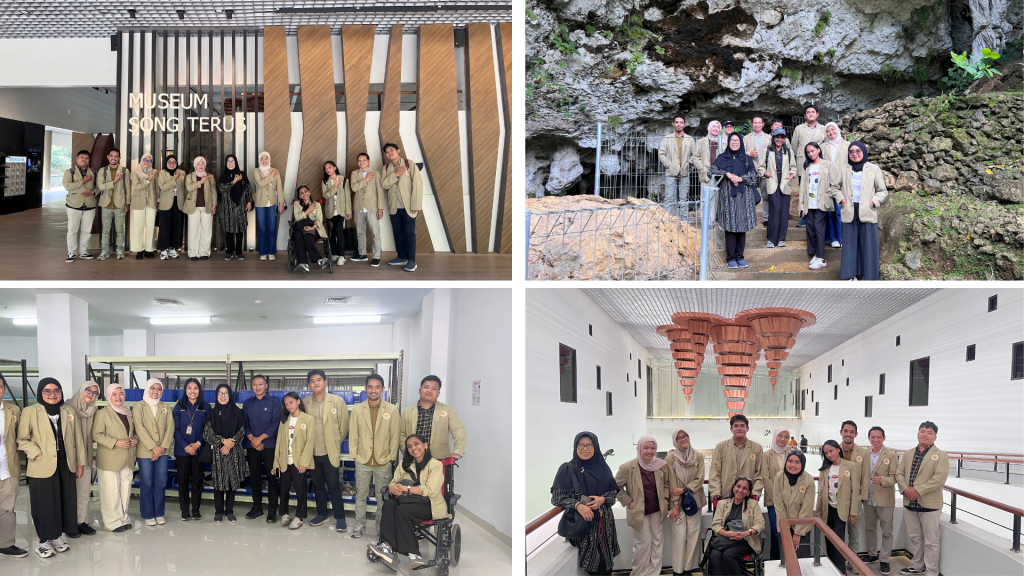
On Saturday, 11 April 2026, the Environmental Science Study Program, Graduate School, Universitas Gadjah Mada conducted a field study with students from the socio-cultural specialization in Pacitan Regency, East Java. The activity took place at the Song Terus Cave Site and Song Terus Museum. The field study was attended by 10 students accompanied by the lecturer of the Cultural Environment course, Dr. Dra. Niken Wirasanti, M.Si.
(Field Work Team)
Pacitan Regency is one of the regions located in the southern part of Java Island and is included in the Gunung Sewu area. This region is well known for its karst landscape, which contains numerous natural caves, one of which is Song Terus Cave. The cave has become an important object of study for national and international archaeologists due to its significant findings related to prehistoric human life. One of the most notable discoveries is a prehistoric human skeleton known as “Mbah Sayem,” found in 1999 at the cave entrance, which is approximately 70 meters long and 15 meters wide.
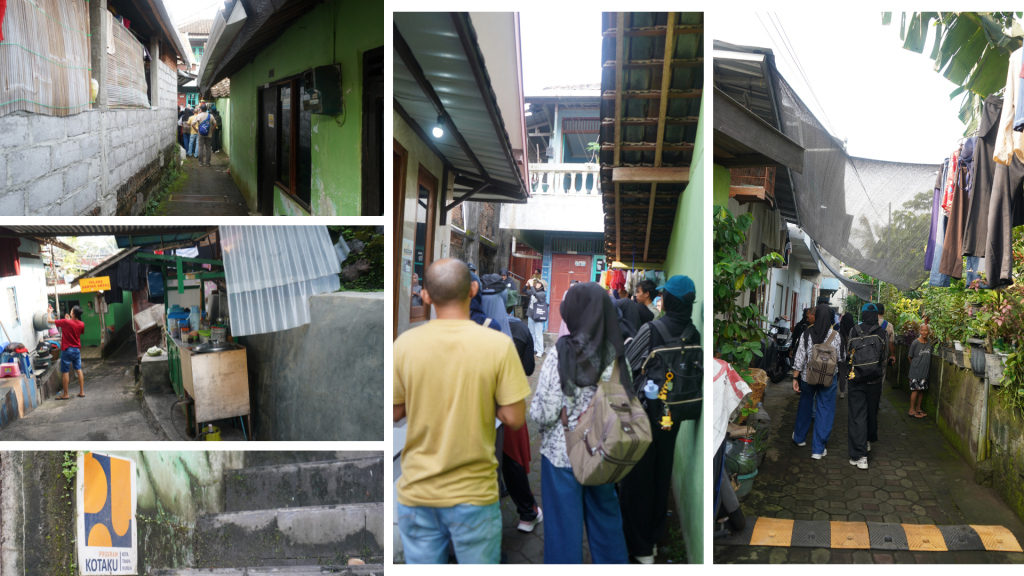
Yogyakarta (06/04) — Students conducted a field study as part of the Environmental Management course along the banks of the Code River in Yogyakarta, accompanied by Prof. Bakti Setiawan. The activity was designed as a contextual learning experience to understand directly how environmental management principles are implemented amid limited space and high urban population density.

(Explanation by Prof. Bakti Setiawan)

(Residential Area View)
In his introduction, Prof. Bakti explained that environmental management does not only concern the technical aspects of management but also encompasses social, economic, and spatial dimensions. One of the main issues observed was population and building density, reflected in the high ratio of building area to land area. This condition indicates significant pressure on the environmental carrying capacity, particularly in riverbank areas. In the case of the Code River, settlement patterns have developed organically, largely through the informal sector. “Here we can see how communities adapt to limited land availability, often without prior structured planning,” he explained.
Yogyakarta, March 11, 2026 — The Master’s Program in Environmental Science at Universitas Gadjah Mada held the third meeting in the series of preparatory sessions for the 2026 Fieldwork Program (Kuliah Kerja Lapangan/KKL) on Wednesday (March 11), conducted online. The session was attended by 42 students participating in the KKL 2026 program. During the session, students received academic insights from Dr. Tasdiyanto, S.P., M.Si., who participated as a practitioner lecturer. He currently serves as a Special Advisor to the Minister at the Ministry of Housing and Settlement Areas (2025–2026). In his presentation, Dr. Tasdiyanto emphasized the importance of adopting a holistic approach in understanding increasingly complex environmental issues.
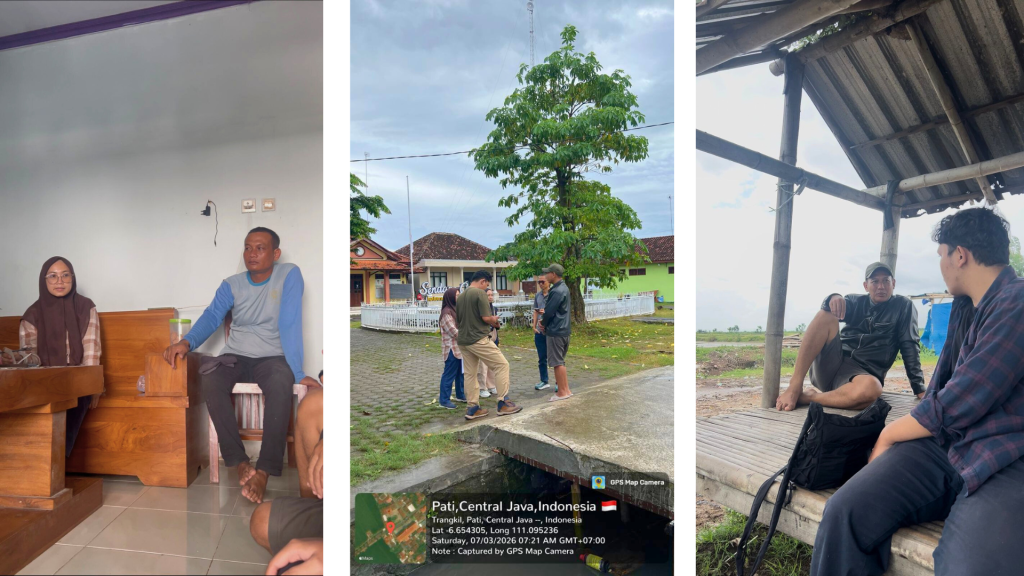
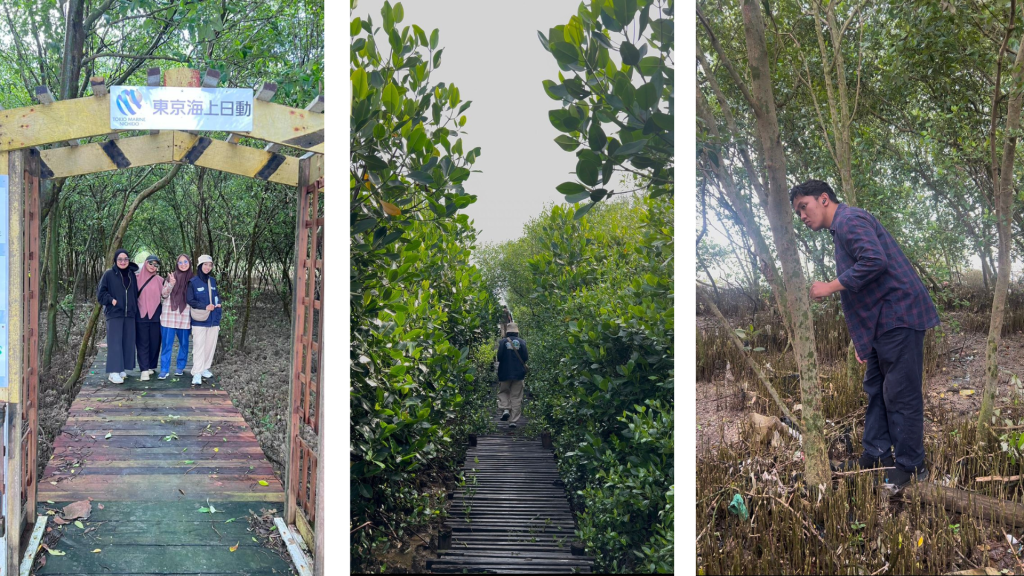
Yogyakarta, March 9, 2026 – Eleven students from the Master of Environmental Science program have successfully conducted a preliminary survey for their 2026 Fieldwork Program (KKL) in Pati Regency, Central Java. The two-day fieldwork survey, from Thursday (March 6) to Friday (March 7), covered four main sub-districts: Pati, Juwana, Wedarijaksa, and Jakenan, as well as the entire coastal area.


(Activity Documentation)
This survey is a crucial follow-up to the initial briefing to solidify readiness for the KKL implementation, scheduled for July 2026. To optimize the observation process, in line with the overarching theme of “Coastal Ecosystem Resilience and Community Adaptation to Environmental Change in Pati Regency”, the eleven students were divided into two main working groups: the Coastal Team and the City Team.
Jakarta, 26 February 2026 – The Graduate School of Universitas Gadjah Mada (SPs UGM) participated in a Focus Group Discussion (FGD) entitled “Housing, Urban Areas, and the Challenges of Sustainable Development,” organized by the Graduate School of Sustainable Development of Universitas Indonesia (SPPB UI) in collaboration with the Emil Salim Institute (ESI). The event was held at the 5th Floor Auditorium of the IASTH Building, UI Salemba Campus, on Thursday (26/2). SPs UGM was represented by Dr. Sudaryatno, M.Si., Head of the Master’s Program in Environmental Science.
Yogyakarta, 25 February 2026 – The Master’s Program in Environmental Science organized the initial briefing for the 2026 Fieldwork Program (Kuliah Kerja Lapangan/KKL) on Wednesday (25/2) at Room E502, KLMB Building, Faculty of Geography. The activity was attended by 42 students from the even semester cohort of the 2024/2025 Academic Year and the odd semester cohort of the 2025/2026 Academic Year. This briefing served as the first step in preparing students for the KKL implementation scheduled for July 2026.
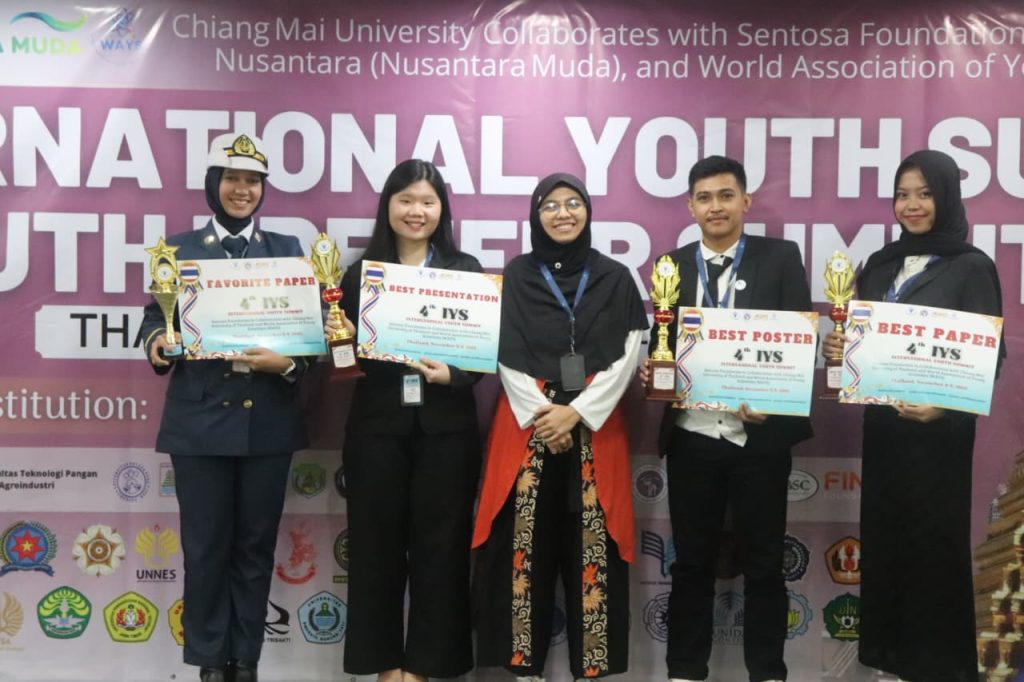
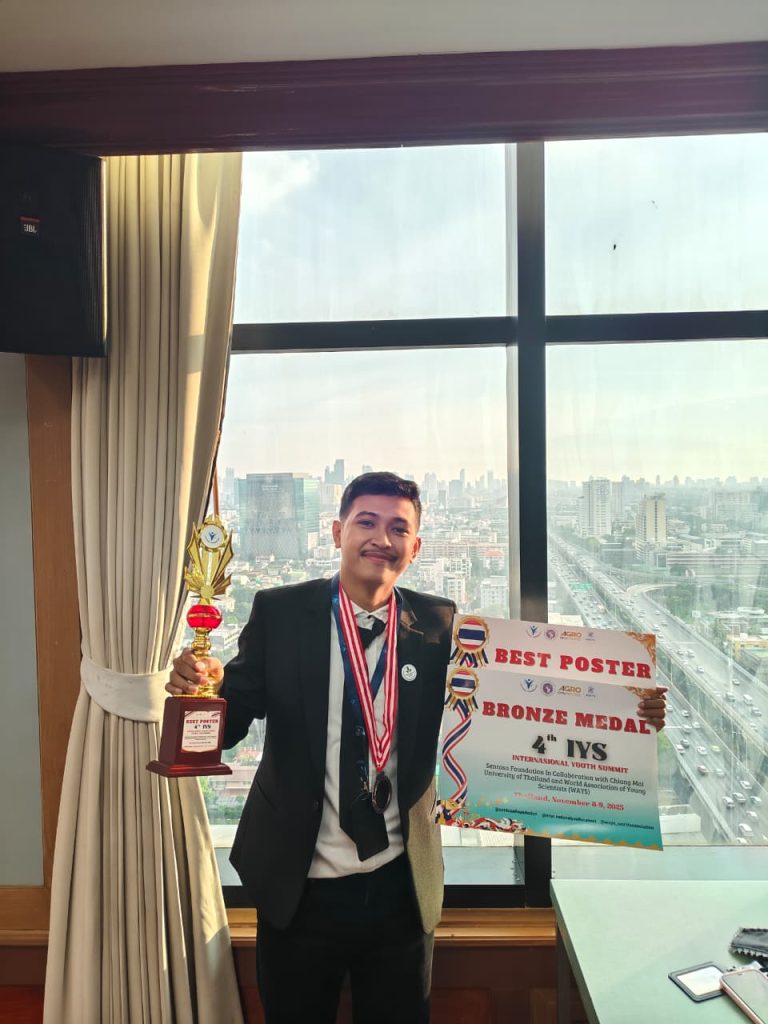
Three Master’s students of Environmental Science at Universitas Gadjah Mada—Nurlaila Sahara Worabay, Baso Samsul Rijal, and Dina Aprilia—successfully achieved remarkable accomplishments at an international forum. During the 4th International Youth Summit (IYS) 2025, held in Thailand on 8–9 November 2025, they were awarded the Best Poster Award and additionally secured a Bronze Medal for their outstanding presentation.

(Award Documentation)
The International Youth Summit is a global academic and innovation platform that brings together hundreds of youth leaders, university students, and young researchers from various countries to present their scientific works, innovations, and creative ideas across multiple fields. Participants are evaluated by an international panel of judges through both oral presentations and innovative poster displays.
In support of the development of the Nusantara Capital City (IKN) as a sustainable smart city, the 2025 Fundamental Research Team from Universitas Gadjah Mada (UGM) conducted a field survey from 11–16 August 2025. This activity is part of the 2025 Fundamental Research scheme with the theme: “Smart Waste Management Innovation and Systems to Support the Implementation of a Smart City in Nusantara Capital City.”
(Event Documentation)
The research team was led by Prof. Dr. Rini Rachmawati, S.Si., M.T., a faculty member of the Department of Development Geography and Chair of the Regional Development Study Focus in the Master’s Program in Geography at UGM. She was assisted by two principal researchers: Prof. Dr. Eko Haryono, M.Si. (Department of Environmental Geography and Head of the Doctoral Program in Environmental Science at UGM) and Ir. Agus Prasetya, M.Eng.Sc., Ph.D. (Department of Chemical Engineering, UGM).