

Yogyakarta, 25 February 2026 – The Master’s Program in Environmental Science organized the initial briefing for the 2026 Fieldwork Program (Kuliah Kerja Lapangan/KKL) on Wednesday (25/2) at Room E502, KLMB Building, Faculty of Geography. The activity was attended by 42 students from the even semester cohort of the 2024/2025 Academic Year and the odd semester cohort of the 2025/2026 Academic Year. This briefing served as the first step in preparing students for the KKL implementation scheduled for July 2026.

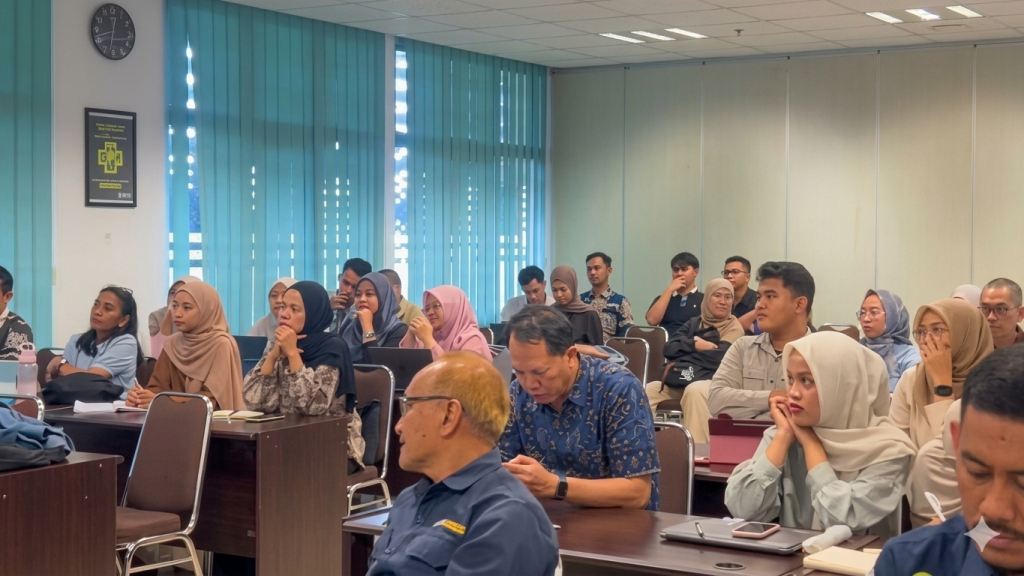
(Activity Documentation)
The session involved five academic supervisors: Dr. Sudaryatno, M.Si., Dr. Emilya Nurjani, S.Si., M.Si., Dr. Tjahyo Nugroho Adji, S.Si., M.Sc.Tech., Dr. Noorhadi Rahardjo, M.S., and Dr. Priyaji Agung Pambudi, S.Pd., M.Si. During the session, the supervisors presented an initial overview of the planned field activities that will take place in Pati Regency, Central Java.
The 2026 KKL carries the overarching theme “Environmental Resilience and Governance Studies,” aimed at providing students with a comprehensive understanding of various environmental challenges and sustainable management efforts. Through this activity, students are expected to integrate interdisciplinary scientific approaches in examining environmental conditions.
During the initial briefing, several planned research topics that will become the focus of students’ field studies were also introduced. These include coastal flooding studies supervised by Dr. Sudaryatno, coastal abrasion and seawater intrusion studies supervised by Dr. Tjahyo Nugroho Adji, coastal carbon stock analysis supervised by Dr. Emilya Nurjani, vegetation structure and avifauna studies supervised by Dr. Priyaji Agung Pambudi, and studies on social aspects and environmental quality supervised by Dr. Noorhadi Rahardjo.


(Activity Documentation)
The supervisors noted that the topics, methods, and technical aspects of the KKL implementation are still tentative and will continue to be refined through the upcoming series of preparatory briefings. This process aims to ensure both the academic and technical readiness of students before conducting field research in the coastal areas.
Through this fieldwork program, students are expected not only to gain field-based learning experience but also to produce scientific studies that contribute to more sustainable environmental management.
This activity also aligns with efforts to support the Sustainable Development Goals (SDGs), particularly SDG 13 (Climate Action), SDG 14 (Life Below Water), SDG 15 (Life on Land), and SDG 11 (Sustainable Cities and Communities) through the strengthening of scientific studies related to environmental resilience and governance.
Author: Ulyn Nuha