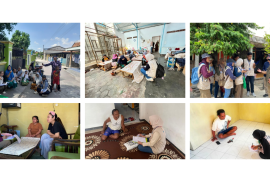
Rembang, June 21–25, 2026 — Students from the Social/Cultural specialization of the Master of Environmental Science Program at Universitas Gadjah Mada (UGM) conducted their 2026 Field Course (Kuliah Kerja Lapangan/KKL) in Rembang and Lasem Subdistricts, Rembang Regency, Central Java, under the supervision of Dr. Noorhadi Rahardjo, M.S. The study focused on settlement environmental quality and socioeconomic conditions—two closely interconnected dimensions that are particularly relevant in coastal urban areas such as Rembang and Lasem, yet are rarely examined simultaneously. Uneven development, unequal access to public facilities, rapid land-use conversion, and environmental degradation provided the context for the study, prompting the research team to explore a central question: Does an individual’s socioeconomic status significantly influence the quality of the residential environment in which they live?
SDG 11
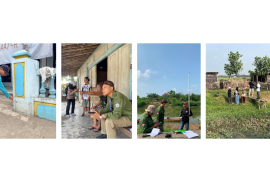
Pati, June 21–25, 2026 — Students from the Abiotic (Physical Environment) specialization of the Master of Environmental Science Program at Universitas Gadjah Mada (UGM) conducted their 2026 Field Course (Kuliah Kerja Lapangan/KKL) in Pati Regency, Central Java. Supervised by Dr. Sudaryatno, M.Si., the field study focused on flood hazard assessment and risk mapping within the Juwana Watershed (DAS Juwana), an area that has experienced recurrent flooding for decades despite ongoing mitigation efforts. Located along the northern coast of Java, Pati Regency consists predominantly of lowland terrain, making it highly susceptible to flooding. The Juwana Watershed experiences seasonal inundation due to a combination of factors, including intense rainfall, limited river capacity, land-use changes, and challenges in water infrastructure management. These floods have caused substantial socioeconomic impacts, affecting agriculture and fisheries, disrupting public facilities, and inundating residential areas for weeks or even months.
REMBANG, June 26, 2026 – The existence of coastal areas along the Northern Coast of Java is currently facing multiple and dynamic pressures, ranging from geomorphological degradation and hydrometeorological hazards to disparities in settlement spatial planning. In response to these complex challenges, the Master of Environmental Science Program of the Graduate School, Universitas Gadjah Mada (UGM), once again deployed its students through the annual thematic Field Study Program (Kuliah Kerja Lapangan – KKL), conducted from June 22 to 25, 2026. Focusing on Rembang and Pati Regencies, this year’s field program integrated a multidisciplinary approach that combined biotic, physical, and social perspectives to identify adaptation potentials and formulate sustainable regional resilience strategies.
Students of the Master of Environmental Science Program, Graduate School, Universitas Gadjah Mada (UGM), conducted the Environmental Water Pollution Mini Project as part of the Environmental Hydrology course. This activity aimed to apply concepts of hydrology and water pollution through field-based research on various water bodies experiencing environmental pressures caused by human activities. The students were divided into five groups, each assigned to different locations and research focuses, resulting in five case studies that illustrate diverse water quality issues across Yogyakarta, Surakarta, and Bantul.
Observing Environmental Engineering in Practice: The Restoration of the Code River in Terban Village
In an effort to promote environmental awareness and foster a healthy aquatic ecosystem, students of the Master of Environmental Science Program conducted a working visit and public discussion in Terban Village on Tuesday (May 26). The activity highlighted the issue of pollution in the Code River and explored long-term plans for river rehabilitation and environmental improvement in the area.
The visit was attended by officials from the Terban Village administration, the Environmental Engineering course lecturer, Muhammad Sulaiman, S.T., M.T., D.Eng., and students from the Master of Environmental Science Program. The event began with a discussion on the general environmental conditions of Terban Village, followed by a presentation on the environmental development plans proposed by the Yogyakarta City Government for the coming years. During the session, students were encouraged to provide suggestions and recommendations for implementing greener and more sustainable environmental engineering strategies.
Yogyakarta, June 5, 2026 – Preparations for the 2026 Field Study Program of the Master of Environmental Science Program continue to progress steadily. A total of 12 student delegates returned to the field to conduct the second phase of the preliminary survey, which took place over two days, from May 21 to 22, 2026. This follow-up survey focused primarily on securing administrative permits, requesting research data, and ensuring the readiness of accommodation, transportation, and lodging arrangements for all KKL participants.
TAIWAN – The International Student Mobility Program of the Doctoral Program in Environmental Science, Graduate School of Universitas Gadjah Mada, continued with an academic visit to The 921 Earthquake Museum of Taiwan, one of the internationally recognized disaster learning centers that integrates scientific approaches with field-based experiences. The activity was guided by Ci-Jian Yang from the Department of Geography, National Taiwan University. During the session, he provided a comprehensive explanation of the 1999 major earthquake in Taiwan, known as the Chi-Chi Earthquake, and the significant transformations that followed in Taiwan’s national disaster mitigation system.
TAIWAN – The Graduate School of Universitas Gadjah Mada (UGM), through its Master’s (S2) and Doctoral (S3) Programs in Environmental Science, once again demonstrated its commitment to enhancing students’ academic capacity through participation in an international forum. This was realized through involvement in The 2026 Annual Meeting of the Geography Society, held at National Changhua University of Education from April 23 to 27, 2026. This participation was part of the Student Mobility Program, which aims to broaden global perspectives, strengthen academic competencies, and expand international networks among UGM’s academic community. The delegation consisted of 14 participants, including faculty members, master’s and doctoral students, as well as alumni, all of whom actively contributed as presenters in various scientific sessions.
Yogyakarta, April 23, 2026 – The Master’s Program in Environmental Science organized an online briefing session for students participating in the 2026 Field Work Course (Kuliah Kerja Lapangan/KKL) on Thursday (23/4). During the session, students received academic enrichment directly from Dr. Tasdiyanto, S.P., M.Si. He attended as a practitioner lecturer who currently serves as Special Advisor to the Minister at the Ministry of Housing and Settlement Areas (2025–2026).

(Activity Documentation)
YOGYAKARTA, 22 April 2026 – In preparation for the Field Study Program (KKL) scheduled for this coming June, the Master of Environmental Science Study Program held an in-depth academic briefing session on Wednesday (22/4). This session specifically explored the methodology for assessing social aspects and environmental quality that will be implemented in the coastal area of Central Java.

(Activity Documentation)
Led directly by Dr. Noorhadi Rahardjo, M.S., students were provided with a comprehensive understanding of the importance of integrating community socioeconomic conditions into environmental resilience analysis. The main focus of the discussion was the planned development of a settlement environmental quality map for Pati Regency, with a specific case study in the Juwana area.