Yogyakarta, April 29, 2026 — The Graduate School of Universitas Gadjah Mada (SPS UGM), through the Field Study Program (Kuliah Kerja Lapang/KKL) conducted by the Master’s Program in Environmental Science, once again emphasized the urgency of a scientific approach in understanding carbon dynamics through the theme “Carbon Estimation in the Context of Environmental Perception.” This activity was not only oriented toward theoretical presentations, but also highlighted critical academic dialogue between lecturers and students as a form of participatory and reflective knowledge construction.
Yogyakarta, April 23, 2026 – The Master’s Program in Environmental Science organized an online briefing session for students participating in the 2026 Field Work Course (Kuliah Kerja Lapangan/KKL) on Thursday (23/4). During the session, students received academic enrichment directly from Dr. Tasdiyanto, S.P., M.Si. He attended as a practitioner lecturer who currently serves as Special Advisor to the Minister at the Ministry of Housing and Settlement Areas (2025–2026).

(Activity Documentation)
YOGYAKARTA, 22 April 2026 – In preparation for the Field Study Program (KKL) scheduled for this coming June, the Master of Environmental Science Study Program held an in-depth academic briefing session on Wednesday (22/4). This session specifically explored the methodology for assessing social aspects and environmental quality that will be implemented in the coastal area of Central Java.

(Activity Documentation)
Led directly by Dr. Noorhadi Rahardjo, M.S., students were provided with a comprehensive understanding of the importance of integrating community socioeconomic conditions into environmental resilience analysis. The main focus of the discussion was the planned development of a settlement environmental quality map for Pati Regency, with a specific case study in the Juwana area.
On Wednesday, April 22, 2026, students of the Master of Environmental Science Program at Universitas Gadjah Mada participated in the National Bulaksumur Thought Seminar themed Academic Integrity and a Dignified Campus in Building Together with Society. This activity was part of the Cultural Environment course, taught by Prof. Dr. Muhammad Baiquni, M.A., involving 10 students. The seminar highlighted the important role of universities as centers of knowledge development as well as agents of social change capable of providing solutions to various societal challenges, including environmental issues.
YOGYAKARTA, 22 April 2026 – The Master’s Program in Environmental Science, Graduate School of Universitas Gadjah Mada (UGM), held a graduation farewell ceremony for Period III of the 2025/2026 Academic Year on Wednesday (22/4). In this period, a total of 16 graduates officially completed their studies and are ready to continue contributing professionally and academically in various fields of environmental management and sustainable development.


(Activity Documentation)
The graduates of the Master’s Program in Environmental Science for this period are Annisa Ayu Fawzia, Baktida Revi Prasetyo, Bayu Pamungkas, Berlania Mahardika Putri, Boy Kurniawan, Cindy Amelina, Dwi Prayoga Ade Sarlita, Fathul Jannah, Herlin Mienatha Simbiak, Linta Aulia, Nur Idham Kholid, Prima Dinta Rahma Syam, Riana Ekawati, Rina Andriyaningrum, Roro Crisanthy Suparyanto, and Witari Elya Utami.
On Saturday (18/4), fourteen students from the Master of Environmental Science Program, Universitas Gadjah Mada, participated in a Soil and Environment Field Study led directly by Prof. Dr. Junun Sartohadi, M.Sc. In his opening remarks, Prof. Junun emphasized that the activity was not merely passive observation, but an active learning process integrating theoretical understanding with empirical validation. The learning experience highlighted that soil cannot be understood separately from geomorphological processes, hydrological dynamics, volcanic activity, and the socio-cultural interventions of local communities. Before entering the field, students were required to formulate initial hypotheses through map analysis, satellite imagery, and previous literature. Without hypotheses, field activities would only result in physical exhaustion without meaningful understanding.
Yogyakarta — Students of Universitas Gadjah Mada once again achieved an international accomplishment at the 2nd International Student Summit 2026 Malaysia, held on 14–15 February 2026. In the competition, the UGM team won the Bronze Medal in the Food category through their innovation entitled “ROOT CHIPS: A Prebiotic Zero-Waste Snack for Low-Carbon Food Solutions.” The team was supervised by Dr. Priyayi Agung Pambudi, with Baso Samsu Rijal serving as team leader, alongside members Nurlaila Sahara Worabay, Rabiyathul Adawiyah Abbas, Muchammad Shaliqin, and Atik Septiana Putri.
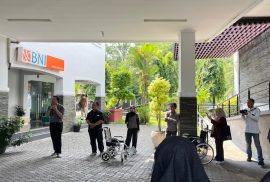
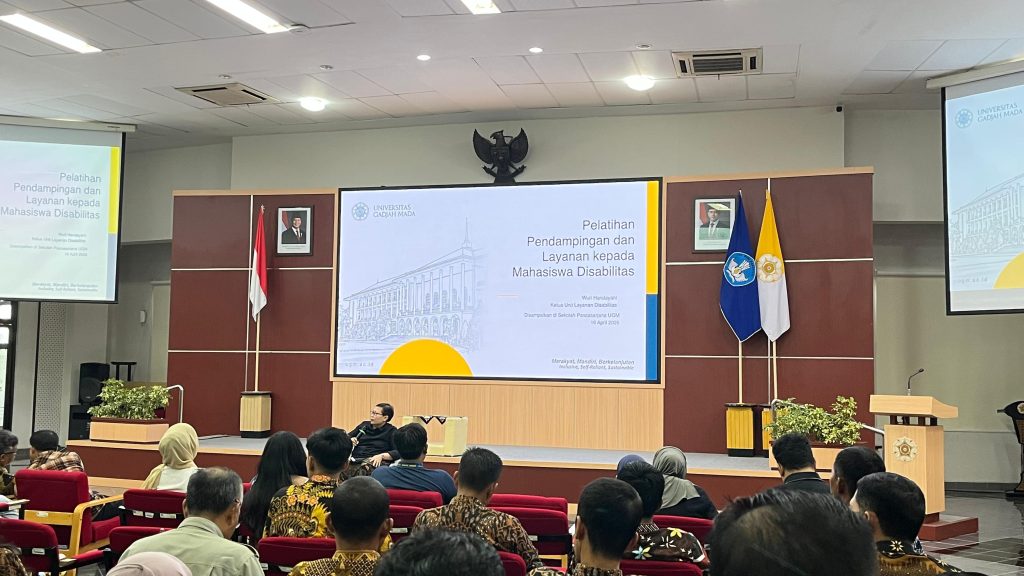
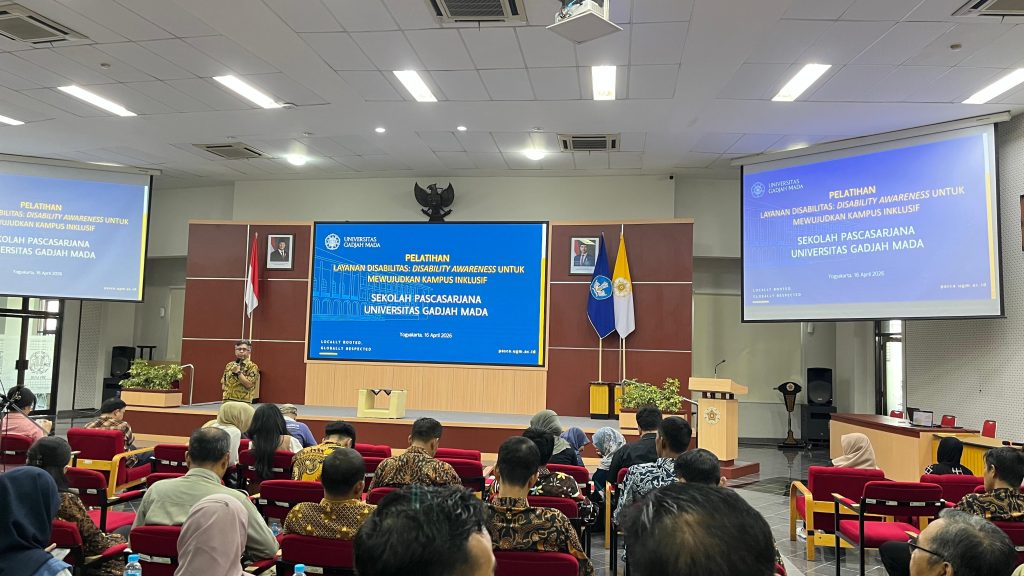
Yogyakarta (16/04) — The Master’s and Doctoral Program in Environmental Science, Graduate School of Universitas Gadjah Mada, participated in the Disability Services Training: Disability Awareness for an Inclusive Campus, organized by the Graduate School of UGM in collaboration with the UGM Disability Services Unit (ULD). The event was held at the 5th Floor Auditorium, Unit 1 Building, Graduate School UGM.
(Activity Documentation)
The Environmental Science programs were represented by lecturers, administrative staff, and student delegates. The participation of these various academic community members reflects a shared commitment to enhancing understanding, sensitivity, and service capacity for students with disabilities within the study programs.
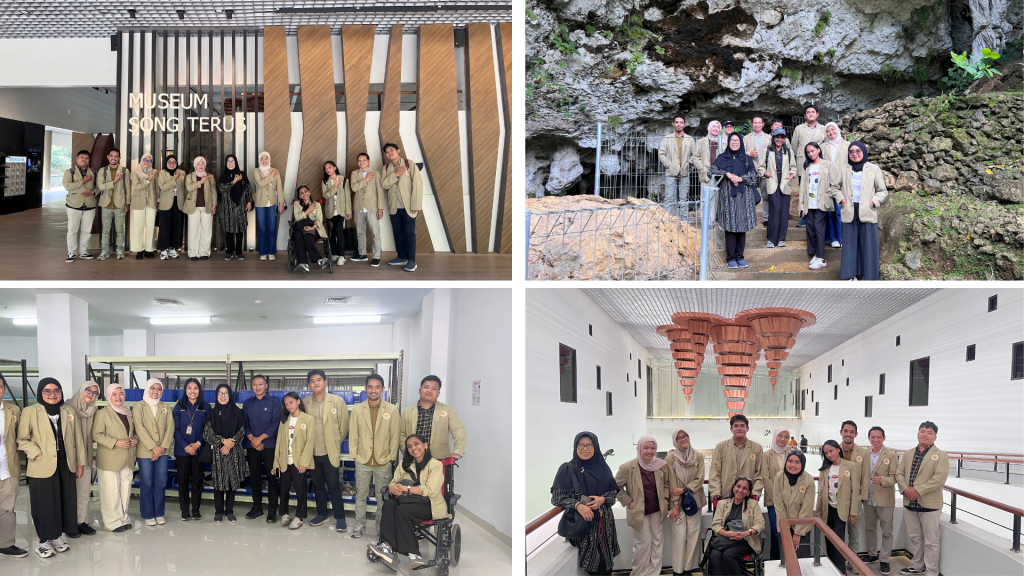
On Saturday, 11 April 2026, the Environmental Science Study Program, Graduate School, Universitas Gadjah Mada conducted a field study with students from the socio-cultural specialization in Pacitan Regency, East Java. The activity took place at the Song Terus Cave Site and Song Terus Museum. The field study was attended by 10 students accompanied by the lecturer of the Cultural Environment course, Dr. Dra. Niken Wirasanti, M.Si.
(Field Work Team)
Pacitan Regency is one of the regions located in the southern part of Java Island and is included in the Gunung Sewu area. This region is well known for its karst landscape, which contains numerous natural caves, one of which is Song Terus Cave. The cave has become an important object of study for national and international archaeologists due to its significant findings related to prehistoric human life. One of the most notable discoveries is a prehistoric human skeleton known as “Mbah Sayem,” found in 1999 at the cave entrance, which is approximately 70 meters long and 15 meters wide.
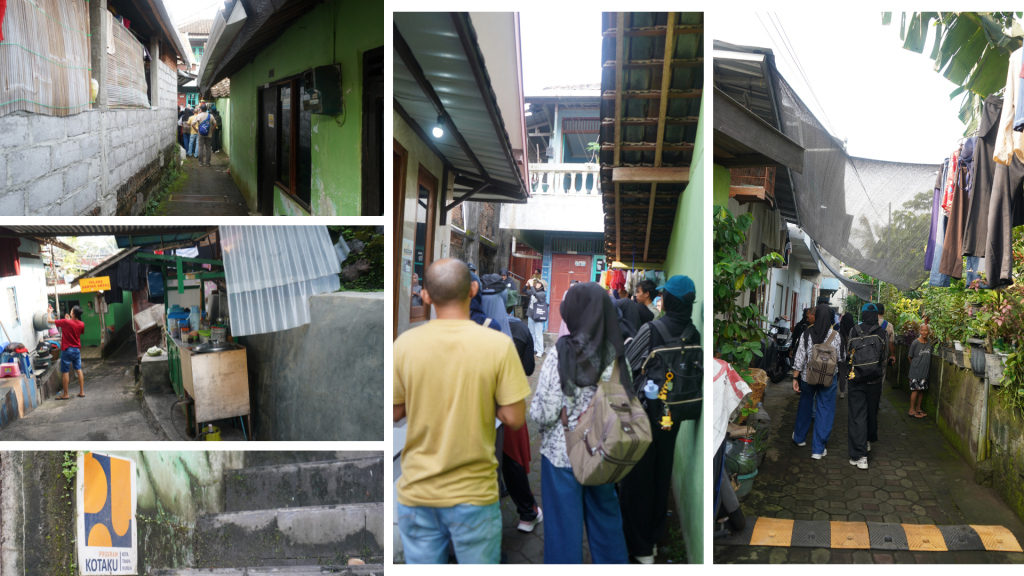
Yogyakarta (06/04) — Students conducted a field study as part of the Environmental Management course along the banks of the Code River in Yogyakarta, accompanied by Prof. Bakti Setiawan. The activity was designed as a contextual learning experience to understand directly how environmental management principles are implemented amid limited space and high urban population density.

(Explanation by Prof. Bakti Setiawan)

(Residential Area View)
In his introduction, Prof. Bakti explained that environmental management does not only concern the technical aspects of management but also encompasses social, economic, and spatial dimensions. One of the main issues observed was population and building density, reflected in the high ratio of building area to land area. This condition indicates significant pressure on the environmental carrying capacity, particularly in riverbank areas. In the case of the Code River, settlement patterns have developed organically, largely through the informal sector. “Here we can see how communities adapt to limited land availability, often without prior structured planning,” he explained.