

TAIPEI – The Student Mobility Program Team of the Doctoral Program in Environmental Science, Graduate School of Universitas Gadjah Mada, continued its series of activities through an academic visit to the soil laboratory at National Taiwan University. This activity was part of efforts to strengthen students’ understanding of environmental and sustainability issues, particularly those related to the role of soil in supporting ecological systems.


(Activity Documentation)
The visit was guided by Prof. Zeng-Yei Hseu, Professor at the Department of Agricultural Chemistry, NTU, who specializes in soil science and soil contamination. During the discussion session, students received insights into various challenges in soil management, including land degradation and pollution caused by human activities.
“Soil is the foundation of life. Without soil, there is no life. Therefore, understanding soil is key to maintaining environmental balance,” said Prof. Zeng-Yei Hseu.
He further explained that soil plays important environmental functions, ranging from providing nutrients for plants, regulating the water cycle, to storing carbon in the context of climate change.

 (Activity Documentation)
During the visit, students also directly observed laboratory facilities used to analyze soil quality, including physical and chemical parameters as well as indications of contamination. This laboratory-based approach provided an overview of how scientific data are utilized to support sustainable environmental management.
Beyond technical aspects, discussions also highlighted the importance of international collaboration in scientific development, especially for countries with diverse environmental characteristics.
“Indonesia has highly diverse soil and environmental characteristics. If there is research collaboration, it would be very beneficial for future scientific development,” he added.
For the UGM team, this visit became a valuable opportunity to broaden research perspectives, particularly in understanding the relationship between soil, human activities, and environmental sustainability.
The activity also reinforced the interdisciplinary approach that characterizes the Doctoral Program in Environmental Science, where various fields of knowledge are integrated to address increasingly complex environmental challenges. Through this visit, students are expected to develop research that is not only theoretical, but also practical and relevant to environmental management needs in Indonesia.
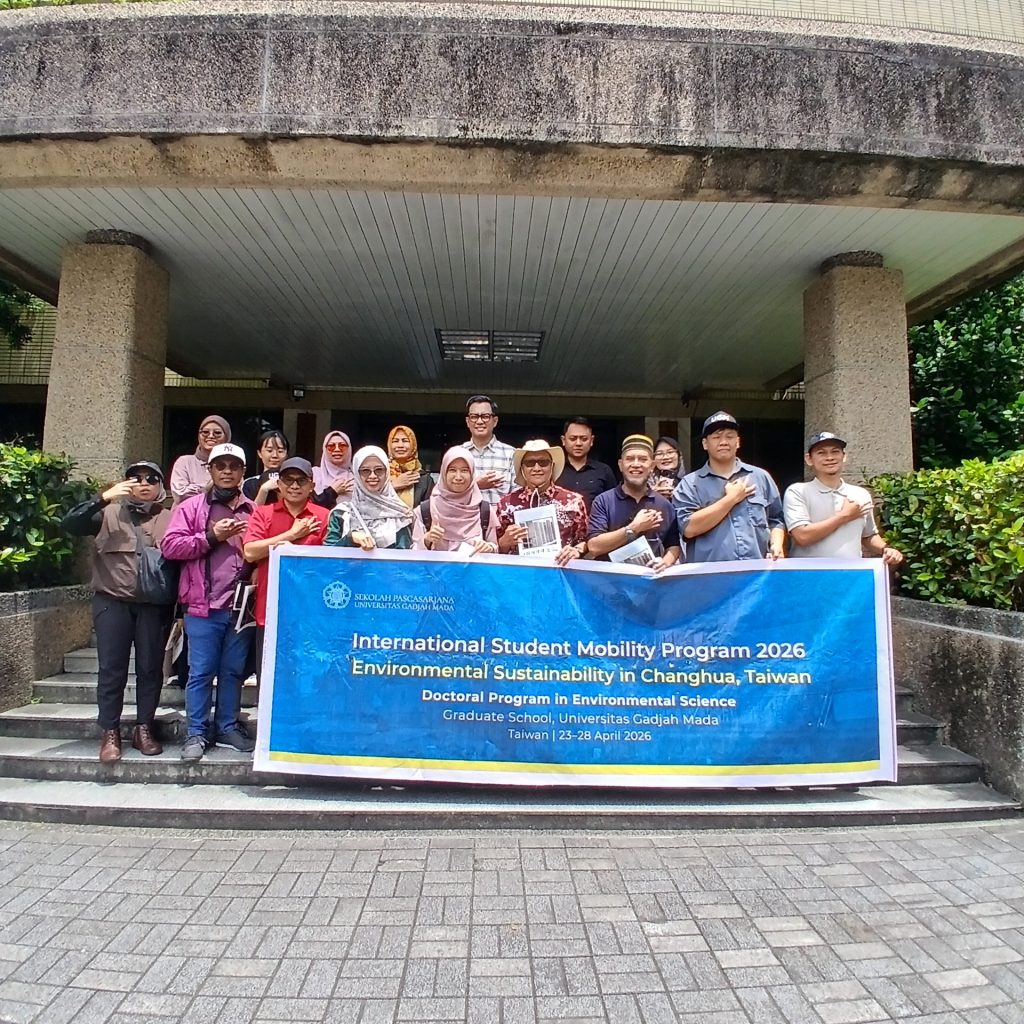
 (Activity Documentation)
This activity also supports the achievement of the Sustainable Development Goals (SDGs), particularly SDG 4: Quality Education through strengthening academic capacity and international learning, SDG 13: Climate Action through understanding the role of soil in climate change mitigation, SDG 15: Life on Land through studies on soil conservation and sustainable land management, and SDG 17: Partnerships for the Goals through strengthening international academic and research collaboration.
Author: Student Mobility Program Team