REMBANG, June 26, 2026 – The existence of coastal areas along the Northern Coast of Java is currently facing multiple and dynamic pressures, ranging from geomorphological degradation and hydrometeorological hazards to disparities in settlement spatial planning. In response to these complex challenges, the Master of Environmental Science Program of the Graduate School, Universitas Gadjah Mada (UGM), once again deployed its students through the annual thematic Field Study Program (Kuliah Kerja Lapangan – KKL), conducted from June 22 to 25, 2026. Focusing on Rembang and Pati Regencies, this year’s field program integrated a multidisciplinary approach that combined biotic, physical, and social perspectives to identify adaptation potentials and formulate sustainable regional resilience strategies.
SDG 13
Yogyakarta – The Master’s (M.Sc.) and Doctoral (Ph.D.) Programs in Environmental Science at the Graduate School, Universitas Gadjah Mada (UGM), conducted the Final Examinations for the Even Semester of the 2025/2026 Academic Year as part of the evaluation of students’ learning outcomes. The examinations were held from June 8 to 19, 2026, in accordance with the University’s academic calendar. This semester’s assessment reflects the implementation of the Outcome-Based Education (OBE) approach, which places intended learning outcomes at the center of the assessment process. Consequently, assessment methods were carefully designed to align with the characteristics, competencies, and expected outcomes of each course.
Jakarta, June 17, 2026 – The Head of the Master’s Program in Environmental Science at Universitas Gadjah Mada (UGM), Dr. Sudaryatno, M.Si., attended the 2026 Green Economy Forum (Forum Ekonomi Hijau/FEH 2026) organized by the Universitas Padjadjaran Alumni Association (IKA UNPAD) at the PT PLN (Persero) Headquarters Auditorium in Jakarta. Carrying the theme “Ecosystem and Resource Development,” the 2026 Green Economy Forum served as a cross-sector collaborative platform to formulate policies and concrete initiatives aimed at accelerating the implementation of a green economy in Indonesia. The forum brought together representatives from the government, academia, the private sector, financial institutions, state-owned enterprises (SOEs), regional governments, and environmental communities to discuss a wide range of strategic issues, including strengthening green economy policies and financing, carbon trading, energy transition, ecotourism, and regenerative economy.
Yogyakarta, June 8, 2026 – Universitas Gadjah Mada (UGM) and the University of Leeds (UoL), United Kingdom, have initiated discussions on a potential academic collaboration through a Double Degree (DD) program at the doctoral level. The preliminary meeting was held online on Monday (June 8) and brought together representatives from the Faculty of Environment at the University of Leeds, along with faculty leaders, graduate program representatives, and related offices from UGM.

The meeting marked a strategic step toward strengthening international collaboration between the two institutions, particularly in areas aligned with the Faculty of Environment’s expertise, including transportation, environmental pollution, water resources, geology, and other environmental studies. Representatives from the University of Leeds included Prof. Dr. Guy Ziv (Professor in Socio-Environmental Systems), Prof. Dr. Zia Wadud (Professor of Mobility and Energy Futures), Dr Desy Ayu Pirmasari (Lecturer in School of Geography), and Matthew Butler, International Partnerships Officer. UGM was represented by leaders from the Faculty of Geography, Faculty of Engineering, Graduate School, Directorate of Global Relations and Partnerships (DKRG), and related doctoral programs. The Doctoral Program in Environmental Science at UGM Graduate School was represented by Professor Eko Haryono and Dr. Priyaji Agung Pambudi.
Students of the Master of Environmental Science Program, Graduate School, Universitas Gadjah Mada (UGM), conducted the Environmental Water Pollution Mini Project as part of the Environmental Hydrology course. This activity aimed to apply concepts of hydrology and water pollution through field-based research on various water bodies experiencing environmental pressures caused by human activities. The students were divided into five groups, each assigned to different locations and research focuses, resulting in five case studies that illustrate diverse water quality issues across Yogyakarta, Surakarta, and Bantul.
Observing Environmental Engineering in Practice: The Restoration of the Code River in Terban Village
In an effort to promote environmental awareness and foster a healthy aquatic ecosystem, students of the Master of Environmental Science Program conducted a working visit and public discussion in Terban Village on Tuesday (May 26). The activity highlighted the issue of pollution in the Code River and explored long-term plans for river rehabilitation and environmental improvement in the area.
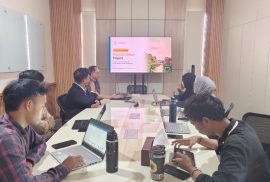
The visit was attended by officials from the Terban Village administration, the Environmental Engineering course lecturer, Muhammad Sulaiman, S.T., M.T., D.Eng., and students from the Master of Environmental Science Program. The event began with a discussion on the general environmental conditions of Terban Village, followed by a presentation on the environmental development plans proposed by the Yogyakarta City Government for the coming years. During the session, students were encouraged to provide suggestions and recommendations for implementing greener and more sustainable environmental engineering strategies.
Yogyakarta, June 5, 2026 – Preparations for the 2026 Field Study Program of the Master of Environmental Science Program continue to progress steadily. A total of 12 student delegates returned to the field to conduct the second phase of the preliminary survey, which took place over two days, from May 21 to 22, 2026. This follow-up survey focused primarily on securing administrative permits, requesting research data, and ensuring the readiness of accommodation, transportation, and lodging arrangements for all KKL participants.
In commemoration of Environmental Day 2026, which carries the theme “Inspired by Nature, For Climate, For Future,” the Master’s Program in Environmental Science, Graduate School, conducted an environmental conservation activity entitled “Eco-Action, Climate Reaction: From Land to Water, We Act Together” on Wednesday, May 20, 2026, in the Bompon Watershed (DAS Bompon), Kalisari Hamlet, Kalisari District, Magelang Regency, Central Java. This area has also received the highest recognition from Indonesia’s Ministry of Environment and Forestry (KLHK) as a ProKlim Lestari village due to its excellence in water resource preservation and its ongoing tree-planting efforts around water springs.
TAIPEI – The Student Mobility Program Team of the Doctoral Program in Environmental Science, Graduate School of Universitas Gadjah Mada, continued its series of activities through an academic visit to the soil laboratory at National Taiwan University. This activity was part of efforts to strengthen students’ understanding of environmental and sustainability issues, particularly those related to the role of soil in supporting ecological systems.

(Activity Documentation)
The visit was guided by Prof. Zeng-Yei Hseu, Professor at the Department of Agricultural Chemistry, NTU, who specializes in soil science and soil contamination. During the discussion session, students received insights into various challenges in soil management, including land degradation and pollution caused by human activities.
TAIPEI – The International Student Mobility Program of the Doctoral Program in Environmental Science, Graduate School of Universitas Gadjah Mada, is one of the implementations of the cooperation between UGM and National Taiwan University. As part of efforts to strengthen academic networks and open further collaboration opportunities, the UGM team had the opportunity to conduct a return visit after NTU previously visited UGM in 2025. This visit became a platform for discussions between UGM and NTU regarding the enhancement of cooperative programs, particularly in the development of research in the fields of environment and sustainability.