
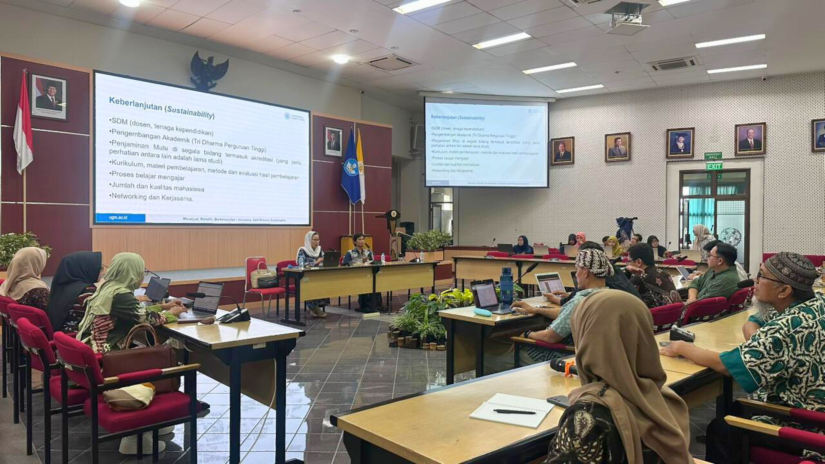
YOGYAKARTA – The Master and Doctoral Programs in Environmental Science of the Graduate School at Universitas Gadjah Mada (UGM) actively participated in the Special Working Meeting held on Thursday, January 22, 2026, at the Graduate School Leadership Meeting Room. The participation of these two programs serves as a strategic point in strengthening coordination, particularly for the newly appointed Heads of Study Programs. This forum was designed to align managerial steps and ensure an optimal leadership transition in supporting the university’s grand vision.

(Activity Documentation)
During the meeting, the Dean of the UGM Graduate School, Prof. Ir. Siti Malkhamah, M.Sc., Ph.D., emphasized the vital role of the new Heads of Programs in maintaining the interdisciplinary and multidisciplinary identity of the Environmental Science programs. Through this coordination session, the Master and Doctoral programs synchronized academic policies, ranging from student recruitment systems via regular and affirmation pathways to strategies for monitoring on-time graduation. This step ensures that the new leadership can immediately implement effective governance that is responsive to student needs and postgraduate quality standards.
Another focus of this participation was the technical preparation for quality assurance and the implementation of Outcome-Based Education (OBE) curricula. The management of both programs delved into the integration of the new curriculum system into the SIMASTER platform, which is scheduled to take full effect in the upcoming semester. With this intensive coordination, the new Heads of Programs are expected to accelerate research productivity, international publications, and community service, which are key performance indicators at the global level.
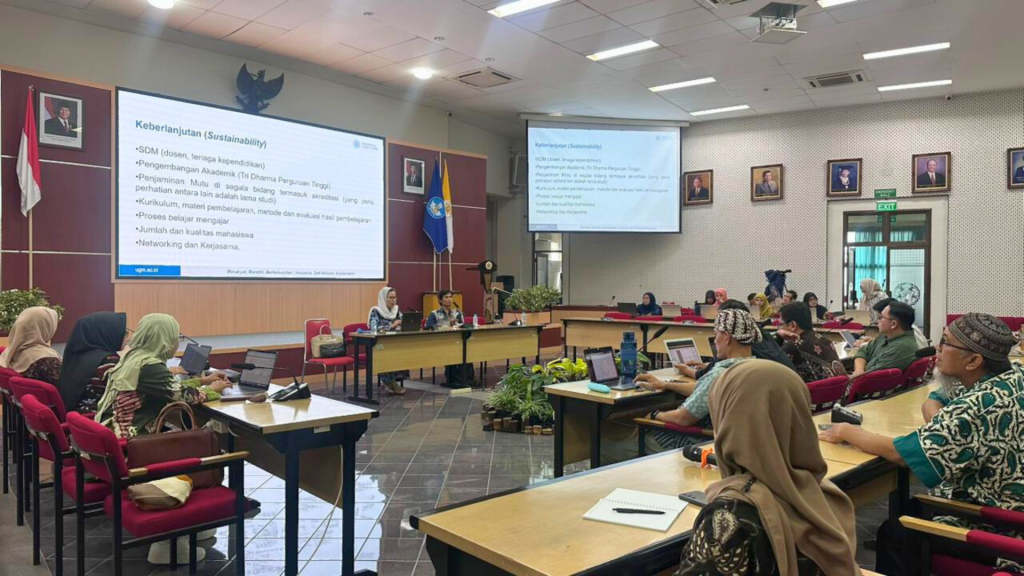
(Activity Documentation)
The Special Working Meeting also reflects the Environmental Science Program’s concrete commitment to supporting the Sustainable Development Goals (SDGs). The strengthening of governance and educational quality discussed aligns with SDG 4 (Quality Education). Furthermore, as a program focused on sustainability, these strategic steps also support SDG 13 (Climate Action) and SDG 17 (Partnerships for the Goals) through the development of multidisciplinary research and sustainable cross-sector collaboration.
Author: Ulyn Nuha (Staff)