

As part of the Lesser Sunda Expedition, the Doctoral Program in Environmental Science, Universitas Gadjah Mada (UGM) continued its research journey to several islands in the Lesser Sunda Archipelago from 4–6 July 2025. The expedition aimed to identify and map the ecological potential of marine and terrestrial ecosystems on small tropical islands. This research adopted an integrated approach, combining analyses of abiotic and biotic resources with insights into local cultural elements. The fieldwork was conducted aboard a research vessel, supported by local enumerators Akbar and Amir, who possess deep knowledge of the region’s socio-ecological dynamics.

(Activity Documentation)
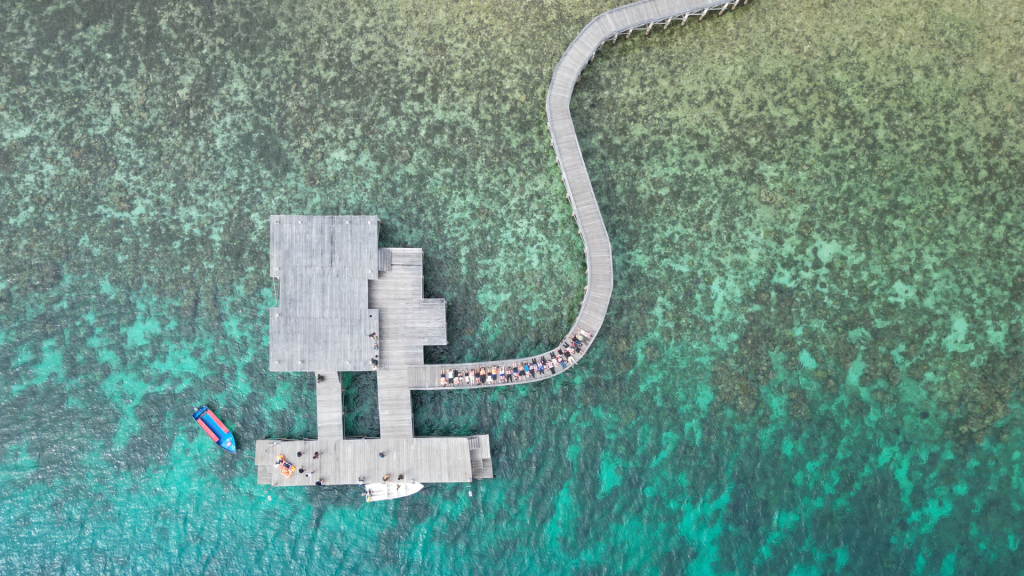
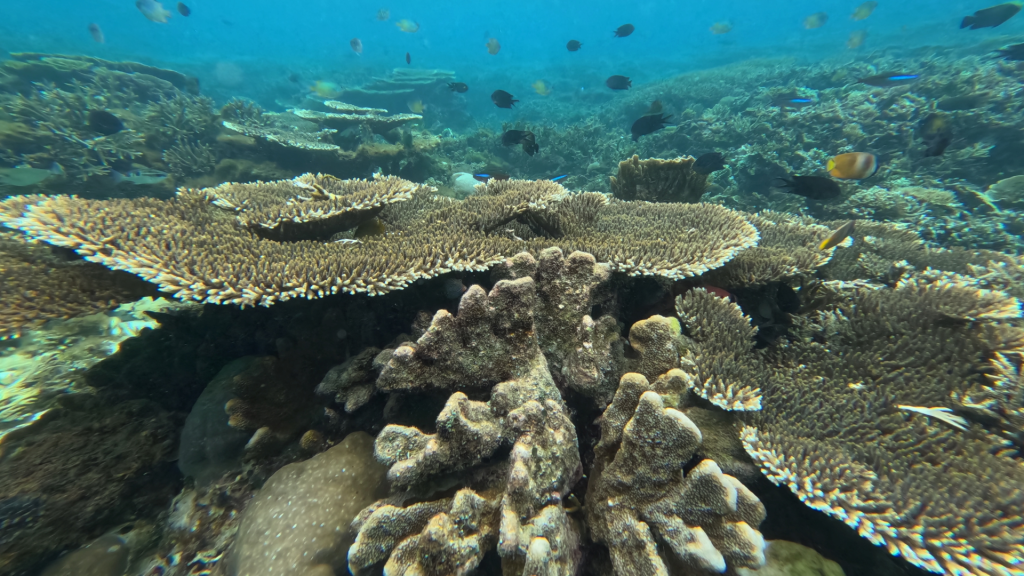
Sebayur Island served as the first observation point, immediately revealing its high conservation potential. The island’s coral reefs and fish communities remain pristine due to the absence of human settlement and minimal anthropogenic interference, making it an ideal site for baseline studies of tropical marine ecosystems. According to Susi Nurweni, a doctoral candidate in Environmental Science, the vibrant coral formations and white sandy beaches observed during snorkeling indicate a healthy ecosystem rarely found in tourism-intensive areas.
The team was unable to visit Manta Island due to strong sea currents, demonstrating a practical application of safety principles based on oceanographic conditions. As an alternative, the researchers conducted observations on Taka Makassar, a sandbar island that only emerges during low tide — a striking example of dynamic coastal geomorphology. Its bright white sands and crystal-clear waters attract tourists, but also highlight the importance of managing the site in accordance with its environmental carrying capacity.
The expedition then proceeded to Padar Island, one of the iconic landscapes of Komodo National Park (KNP). The island features karst formations and rolling savanna hills, making it a popular trekking destination. The hike began at 4:00 a.m. to capture the sunrise from the island’s highest viewpoint. Prior to the trek, park officers provided briefings emphasizing waste management, smoking restrictions, and drone operation permits. However, ongoing infrastructure development — including port expansion and new tourist facilities — has begun to introduce anthropogenic pressures, particularly from unregulated tourism. The lack of adequate waste management facilities underscores the urgent need for improved conservation-based infrastructure.
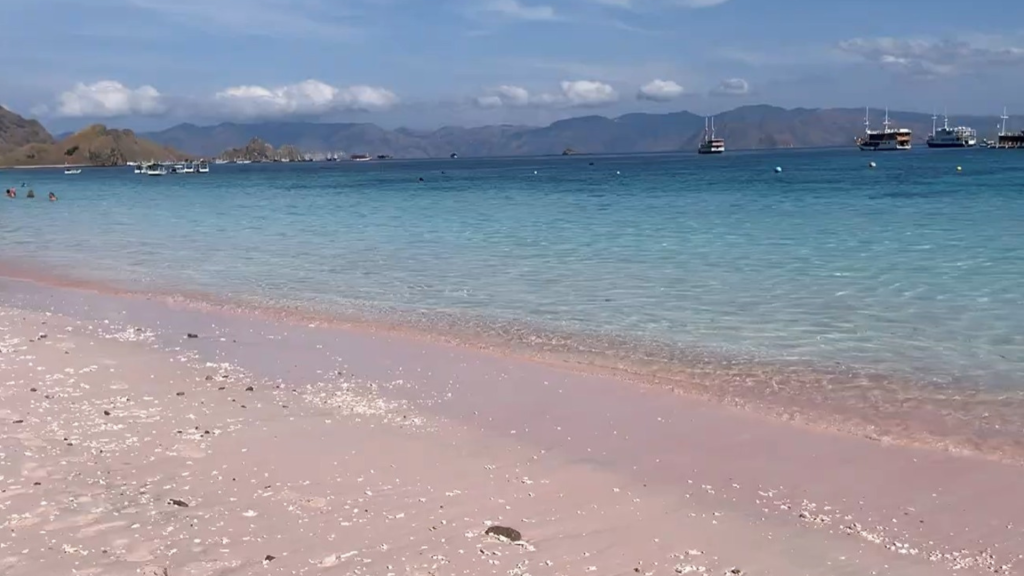
On the western side of Padar Island lies the famous Pink Beach, named for its unique pink-hued sands formed from the fragments of red foraminifera shells. This site is a stunning geotourism attraction, but the increasing number of visitors without proper regulation risks eroding its ecological and geological integrity. Further studies are needed to design sustainable tourism strategies that can safeguard this natural phenomenon.
Komodo Island, the main habitat of the endemic species Varanus komodoensis, showcases a remarkable interaction between abiotic factors such as karstic rocks and high temperatures, savanna vegetation, and diverse wildlife. Before trekking, rangers provided an educational session on the cultural significance of Komodo dragons to local communities. A ranger explained that local legend depicts Komodo dragons and humans as twin siblings, reflecting a deep ecological and spiritual bond between people and nature. The team observed a male Komodo dragon named Thomas, focusing on his feeding behavior, daily activity, and reproductive patterns typically occurring between June and August. The island’s coastal communities depend on fishing, small-scale agriculture, and ecotourism — a model that aligns more closely with community-based ecotourism than with mass tourism.
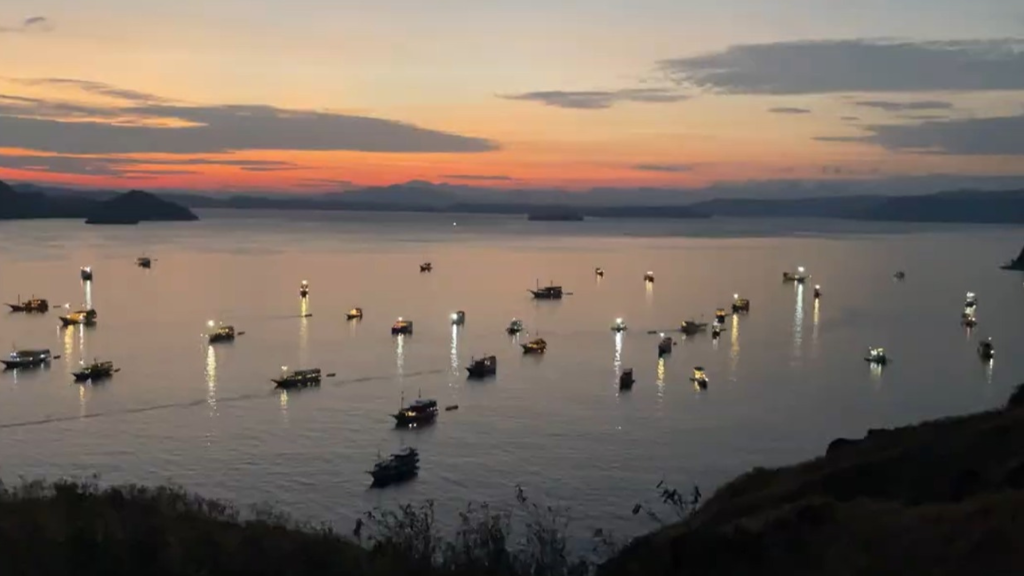
The journey continued to Kalong Island, named after the thousands of large fruit bats (Pteropodidae, suborder Megachiroptera) that inhabit it. The spectacular sight of bats taking flight at dusk offered a unique ecological experience. According to local enumerator Amir, the species diversity of these bats has not yet been thoroughly studied, although their large body size suggests that the island serves as a critical habitat for fruit bats, which play an essential role in pollination and seed dispersal within island ecosystems.
The final destination was Kelor Island, known for its combination of white sandy beaches, calm waters, and a short hiking trail offering a panoramic view from the summit. Dominated by savanna vegetation similar to Padar Island, Kelor provides valuable insights into the interaction between abiotic conditions, vegetation composition, and the impacts of tourism activities on island landscapes.
(Activity Documentation)
This series of field activities not only generated valuable scientific data for conservation purposes but also reinforced the practice of sustainable tourism grounded in local knowledge and community engagement. The expedition demonstrates that effective conservation is inseparable from comprehensive ecological understanding and the integration of social and cultural values as part of long-term sustainability strategies.
Beyond scientific exploration, this initiative makes a tangible contribution to achieving the United Nations Sustainable Development Goals (SDGs). Specifically, it supports SDG 14 (Life Below Water) through monitoring marine and coral reef ecosystems; SDG 15 (Life on Land) by studying terrestrial biodiversity and protecting endemic species such as the Komodo dragon; and SDG 13 (Climate Action) through field-based adaptation to environmental changes and ecological risk management. In the social dimension, the expedition aligns with SDG 11 (Sustainable Cities and Communities) by promoting community-based ecotourism, and SDG 4 (Quality Education) by integrating field education, outreach, and interdisciplinary learning for tourists, local communities, and park authorities.
With its scientific, participatory, and adaptive approach, the expedition is expected to provide a data-driven foundation for policy development in managing Labuan Bajo as a priority conservation area and a living laboratory for sustainability research in Indonesia’s coastal regions.
Authors: Williem Amu, Wahyu Ratnaningsih, Nida Humaida