
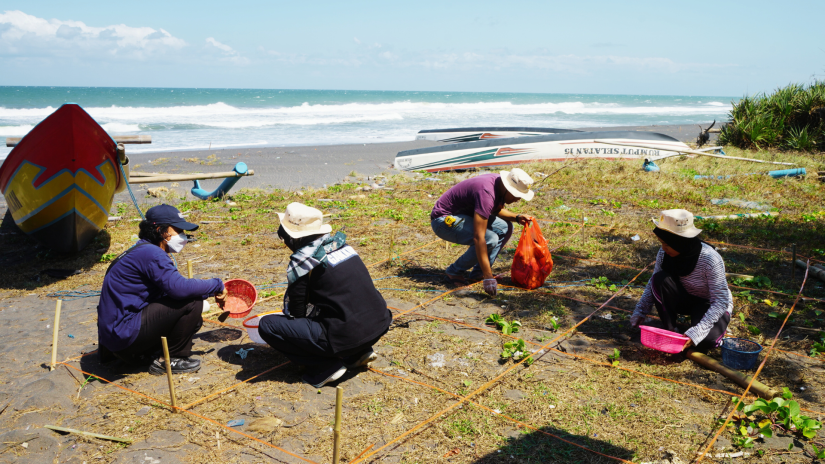
The Environmental Science Master’s Program conducted a physical environmental analysis along the coastal areas of Jatikontal Village and Gedangan Village, Purwodadi Subdistrict, Purworejo Regency, during the Field Study Program held on 15–19 July 2024. Physical factors—particularly waste—play a significant role in influencing the balance of marine ecosystems. Therefore, the Environmental Science Program instructed students to carry out an evaluation of coastal cleanliness by using plastic waste as an indicator and assessing the potential hazards posed by dangerous objects found along both coastal areas. The activities were conducted rigorously and systematically. Students collected waste samples within transects and sub-transects, sorted them, and recorded their findings. In addition to identifying waste types, the analysis also included waste weight, composition, and density.
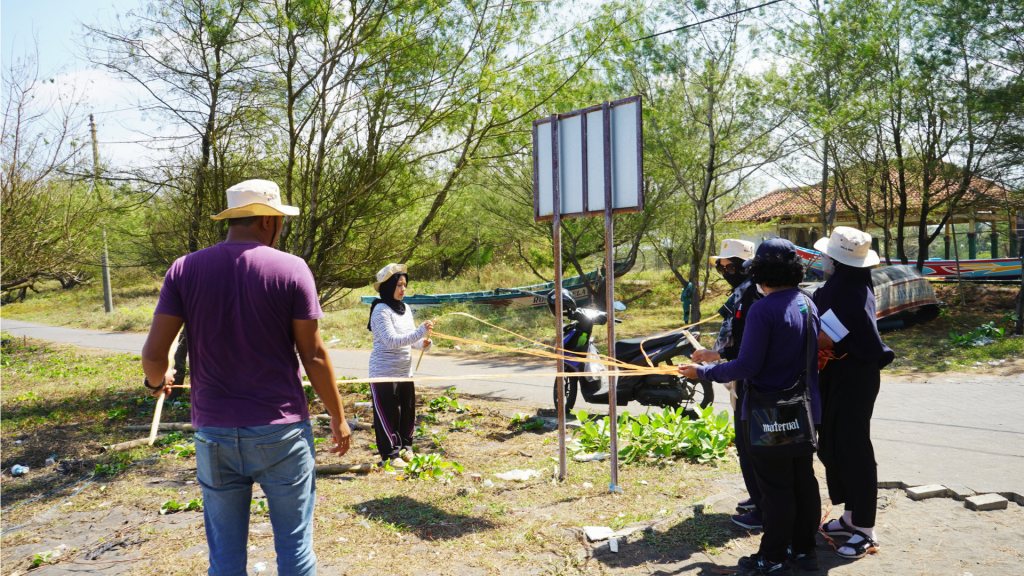
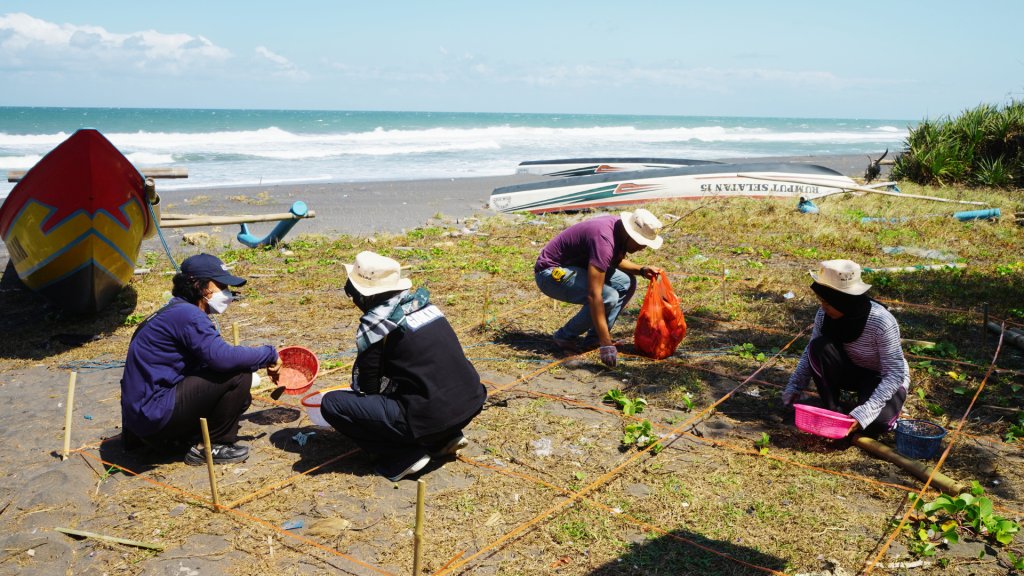
(Field Study Documentation)
This activity aimed to provide information to local communities so they can determine appropriate actions to address the issue. Waste found along the coasts of Jatikontal and Gedangan was diverse, with the majority being plastic waste. Other waste types included fabric, metal, paper, and foam. These materials generally originated from domestic activities and local fisheries. This information can help communities reduce plastic waste and determine the most effective strategies for managing the dominant plastic waste in the area. Furthermore, hazardous items were more frequently found north of the river, where fishing activities are more common. Hazardous items identified included broken glass, bottle caps, thorns, fishing hooks, cigarette butts, batteries, oil residues, and medical waste. These findings can increase community awareness when accessing coastal areas and encourage greater responsibility in preventing the disposal of harmful waste.
Through this activity, the Environmental Science Program seeks to support policymakers in formulating effective waste management strategies. This initiative indirectly contributes to Sustainable Development Goal (SDG) 14: Life Below Water, which focuses on conserving and sustainably using oceans and coastal ecosystems. In addition to applying the 3R concept (reduce, reuse, recycle) to minimize waste sent to temporary disposal sites, communities can also be equipped to enhance the economic and functional value of waste materials. The Purworejo Regency Government may consider adopting the integrated waste management system implemented in Banyumas Regency as a model solution. In Banyumas, communities sell their waste to the local government through the Sampah Online Banyumas (Salinmas) and Ojek Inyong (Jeknyong) applications. The collected waste is then separated into organic and inorganic components and processed into economically valuable products such as paving blocks, roofing materials, bricks, compost, and plastic pellets.
Author: Izza A