
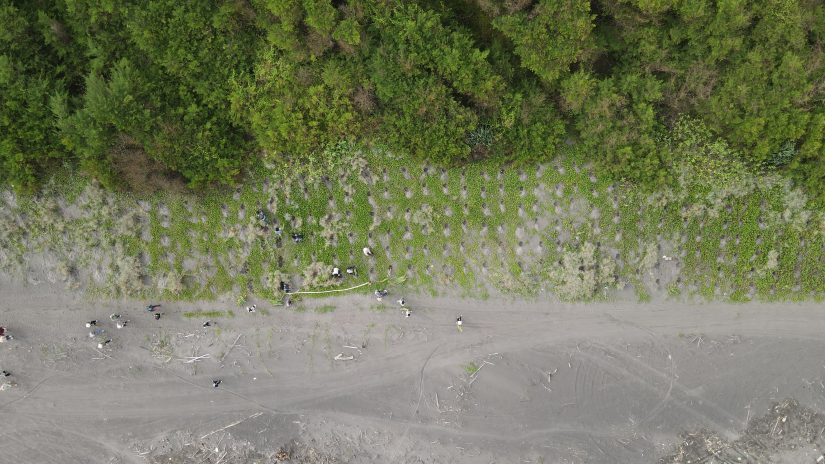
The Graduate Program in Environmental Science, Universitas Gadjah Mada (UGM), organized an environmental action initiative titled “Funtastic Without Plastic: Save Nature for the Future” as part of the World Environment Day 2025 commemoration, which carries the global theme “Ending Plastic Pollution.” The event, held on Saturday, May 31, 2025, at Pelangi Beach, Bantul Regency, Yogyakarta, embodied the commitment of the academic community to supporting the achievement of the Sustainable Development Goals (SDGs)—particularly those related to marine ecosystem protection and reducing the impacts of plastic pollution.
Attended by 150 participants, the event was conducted in collaboration with Fourkey Yogyakarta (Yayasan Aksi Konservasi Yogyakarta), showcasing strong synergy between higher education institutions and civil society organizations in implementing tangible environmental conservation efforts. The activity directly contributes to SDG 14 (Life Below Water) through marine ecosystem protection and restoration, and SDG 15 (Life on Land) through coastal biodiversity conservation.

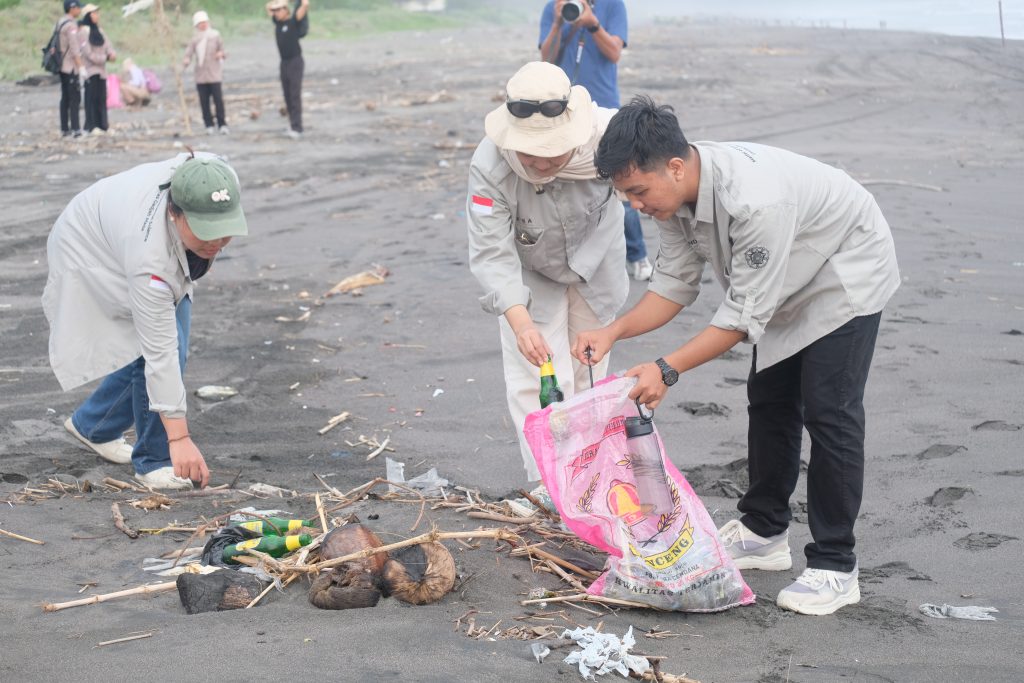
(Field Documentation)
Several participants shared their impressions after taking part in the environmental action.
Faouzi, a master’s student from Algeria, expressed,
“It was quite exhausting, but I really enjoyed it. It was a fun and meaningful experience. This is my first time participating in a conservation activity, and I’d love to join again in the future.”
Similarly, Senpei Wu, an international student from Guilin University of Electronic Technology, China, shared his appreciation, saying,
“Today meant a lot to me. The beach here is beautiful, and Indonesia is an amazing country. I’m really happy to be part of this activity. We need to care more about the environment, just like what we did today.”
Both international students agreed that the event provided them with valuable hands-on experience and strengthened their environmental awareness.
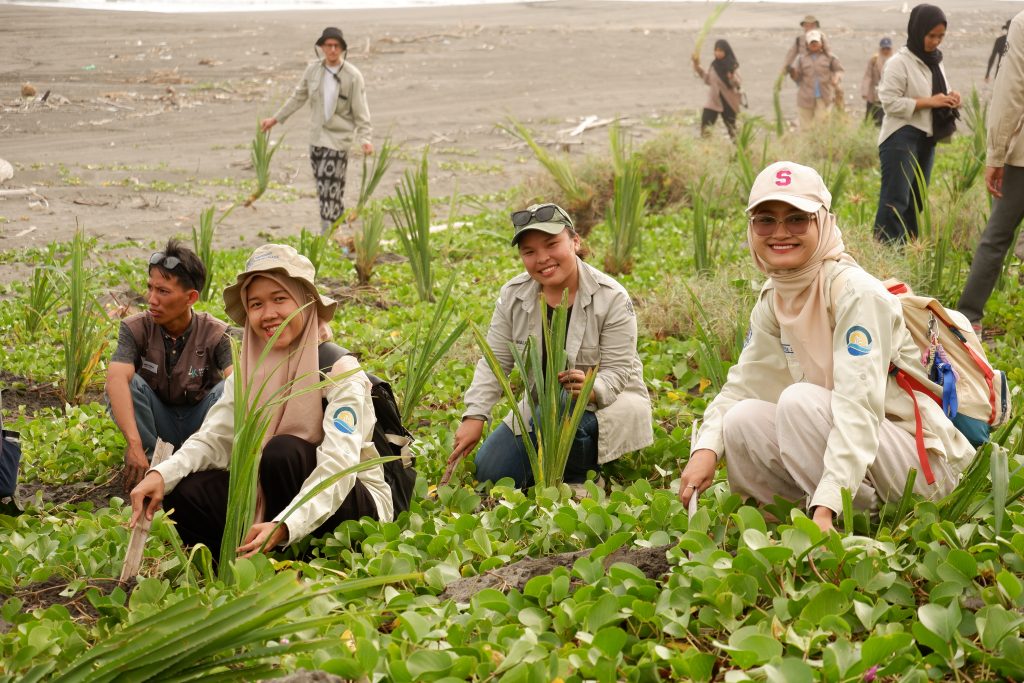
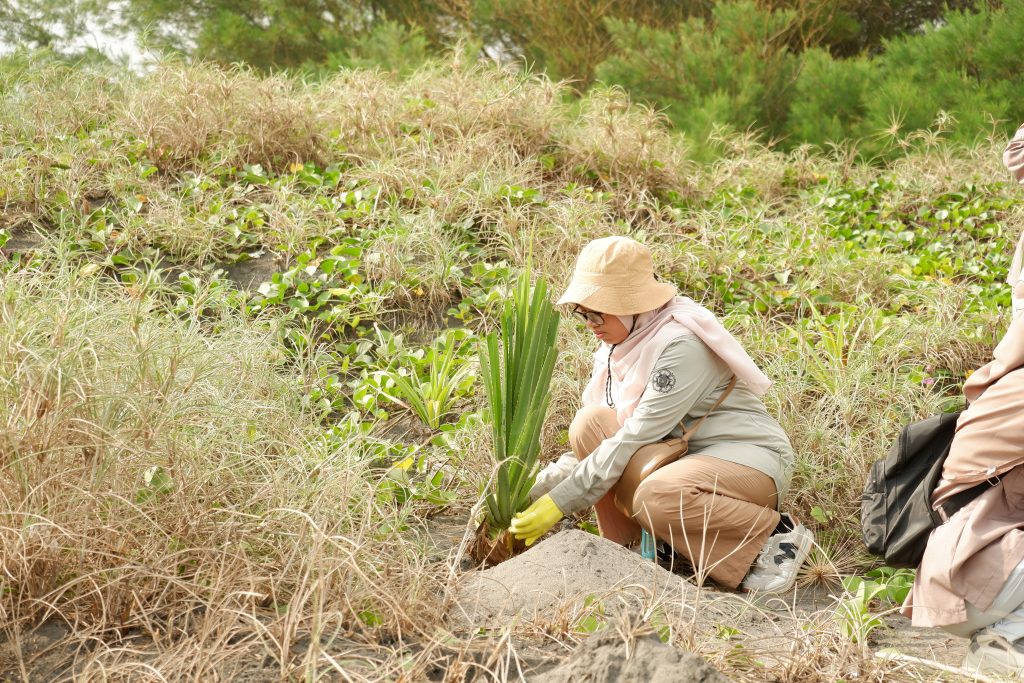
(Field Documentation)
The program comprised three main components, each designed to support coastal ecosystem conservation in an integrated manner.
The beach clean-up activity, involving all participants, served as a direct implementation of the commitment to reduce plastic pollution—aligning with the 2025 World Environment Day theme. Beyond collecting waste, the activity also aimed to educate local communities about the long-term impacts of plastic pollution on marine ecosystems, supporting SDG 12 (Responsible Consumption and Production) through the promotion of sustainable consumption practices.
The planting of 400 pandanus trees along Pelangi Beach represented a strategic initiative for coastal ecosystem restoration, contributing significantly to SDG 13 (Climate Action) by enhancing carbon sequestration capacity and mitigating climate change impacts. Pelangi Beach was chosen for its high ecological potential and urgent need for conservation efforts, as the Bantul coastal area faces ongoing environmental challenges. Pandanus vegetation plays a crucial role in preventing coastal erosion, maintaining shoreline stability, and providing habitats for coastal fauna—making it a vital element in SDG 15 (Life on Land) implementation.
The release of 90 sea turtle hatchlings served as the highlight of the event, symbolizing a long-term commitment to endangered species conservation. This initiative directly supports SDG 14 (Life Below Water) by protecting marine biodiversity and preventing species extinction. Sea turtle hatchlings, as an early life stage in marine ecosystems, hold essential ecological roles in maintaining ocean balance. Thus, their release represents a long-term investment in the sustainability of Indonesia’s marine biodiversity.
The success of this event demonstrates the effectiveness of collaborative approaches in environmental conservation programs, aligning with SDG 17 (Partnerships for the Goals) through strengthened cooperation between academia and civil society. UGM students, who accounted for the highest number of contributors to the Yogyakarta Conservation Action Foundation, exemplify the strategic role of youth in advancing environmental conservation and sustainable development.
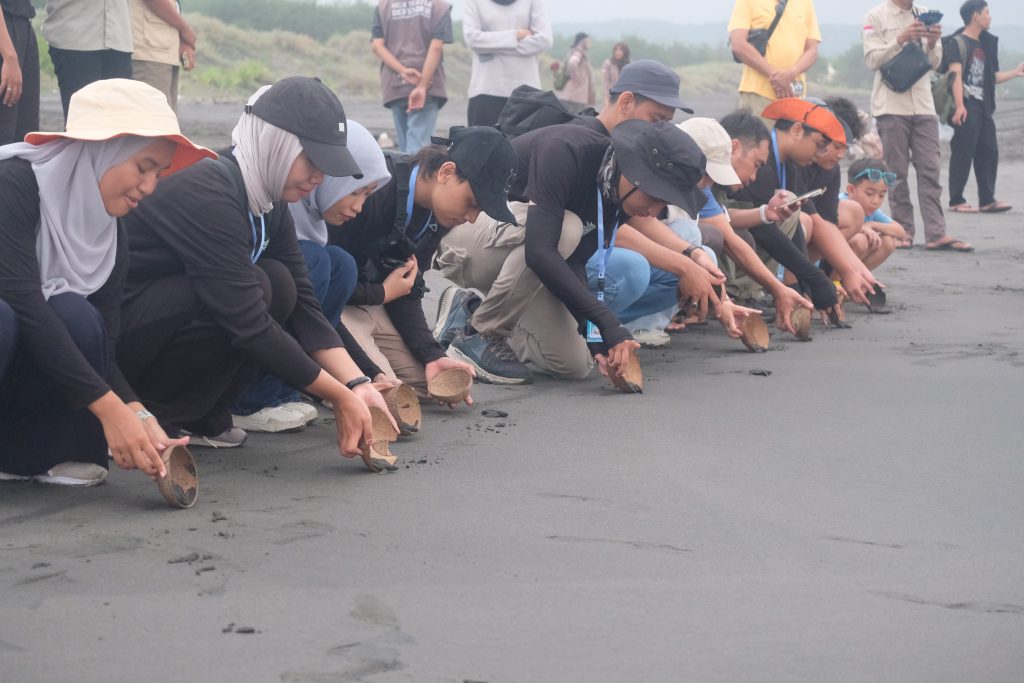
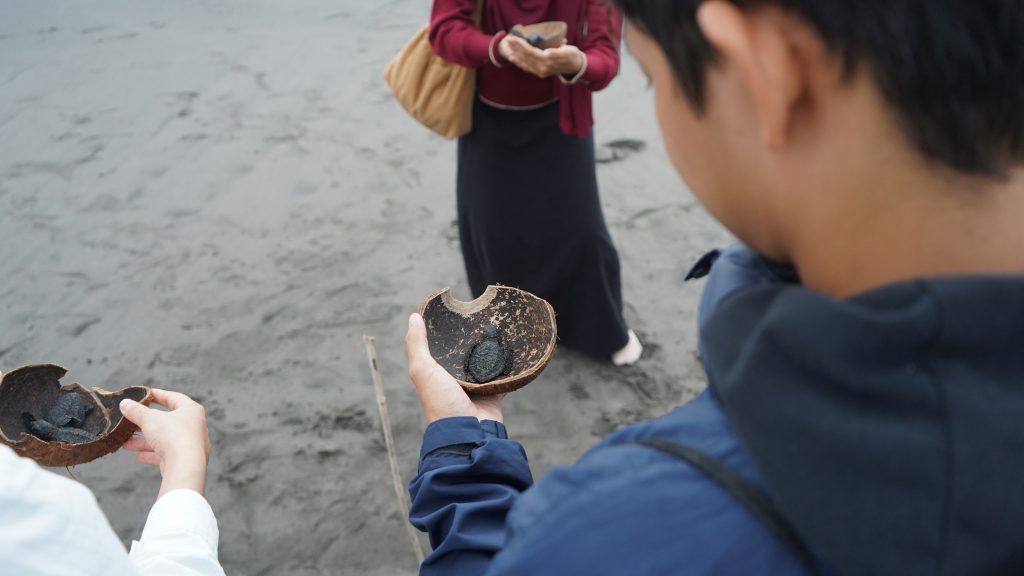
(Field Documentation)
This initiative also contributes to SDG 4 (Quality Education) through experiential learning that provides participants with direct exposure to real-world environmental challenges and solutions in coastal management. The action-based learning approach enhances participants’ capacity to understand the complexity of environmental issues while developing practical skills for implementing conservation programs.
Through the “Funtastic Without Plastic: Save Nature for the Future” program at Pelangi Beach, the Graduate Program in Environmental Science, UGM, in collaboration with Fourkey Yogyakarta, has demonstrated an effective model of SDG implementation that integrates education, conservation, and community empowerment. The initiative serves as an inspiration for other educational institutions to develop innovative programs supporting the achievement of sustainable development targets, particularly in environmental protection and climate change mitigation.
Moreover, the event provided direct benefits to the local community in Bantul Regency by improving the quality of the coastal environment and strengthening the potential for sustainable ecotourism development.
Author: HLH 2025 Team